Connoisseur.
A clearer path from request to order.
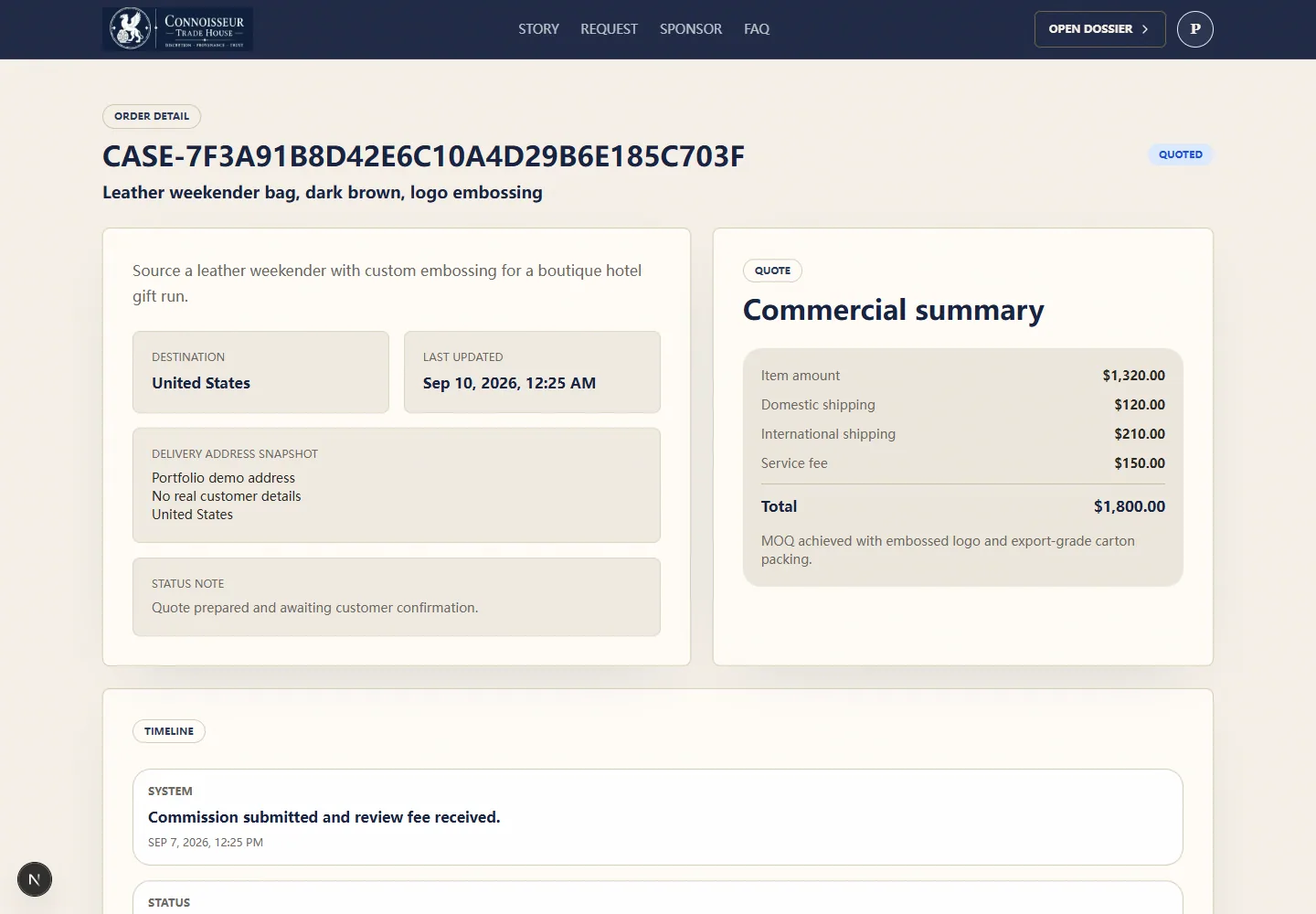
Demo order showing a quotation and sourcing timeline.
- 01
Problem
How can a cross-border sourcing request stay understandable as it moves through quotes and fulfilment?
- 02
Context & constraints
No production backend yet: the MVP had to prove the workflow with in-memory data and mock payments before any real persistence or payment provider.
- 03
My contribution
I started this project with a friend to organise cross-border sourcing information into a traceable request-to-order workflow. This case presents our shared MVP without attributing every component to me.
- 04
Approach & implementation
Customer cases connect requests, quotations, addresses and a timeline. A separate admin workspace supports the other side of the process, using an in-memory store and mock payments to explore the handoffs.
- Request → quote → order
- Customer & admin views
- Mock payments
- 05
Outcomes & evidence
The current MVP uses in-memory data and mock payments. Supabase is a planned migration target, not a connected production database.
- 06
Limitations
In-memory data resets on restart. Payments are mocked and Supabase is a schema target, not a connected production database. The prototype does not establish real fulfilment or customer adoption.
- 07
Future work
Validate the workflow, then migrate persistence and payments to production services.
Interface walkthrough
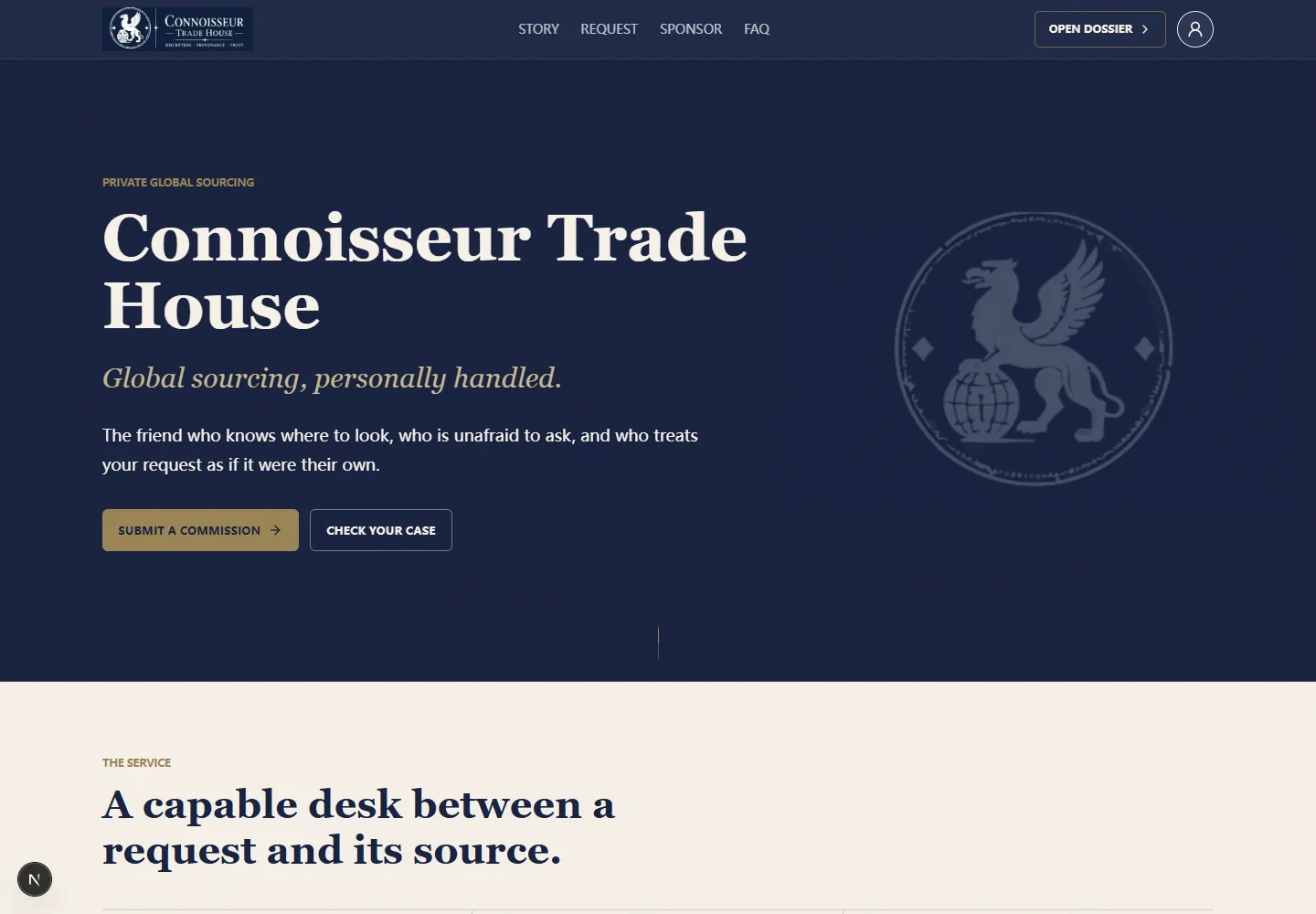
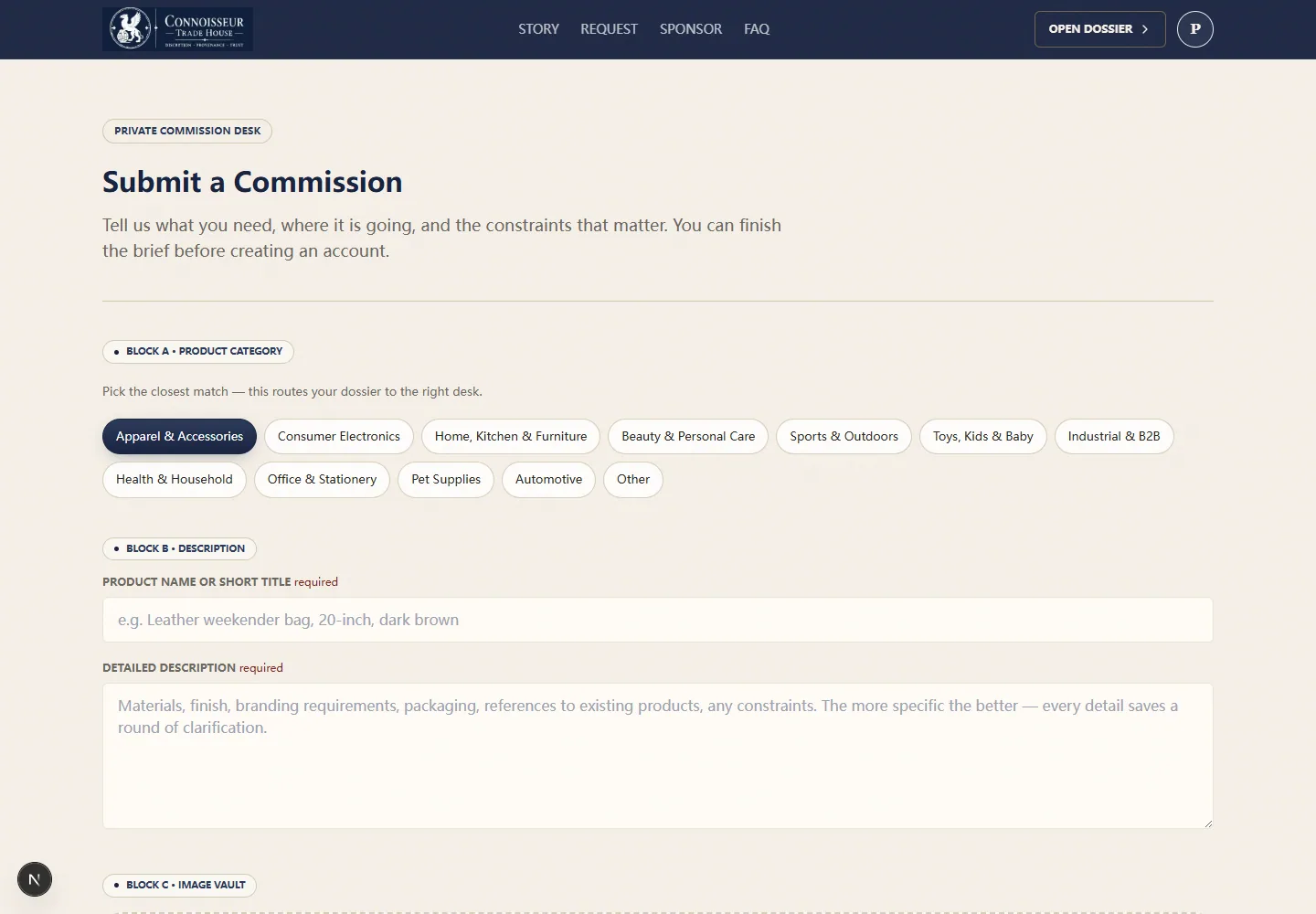
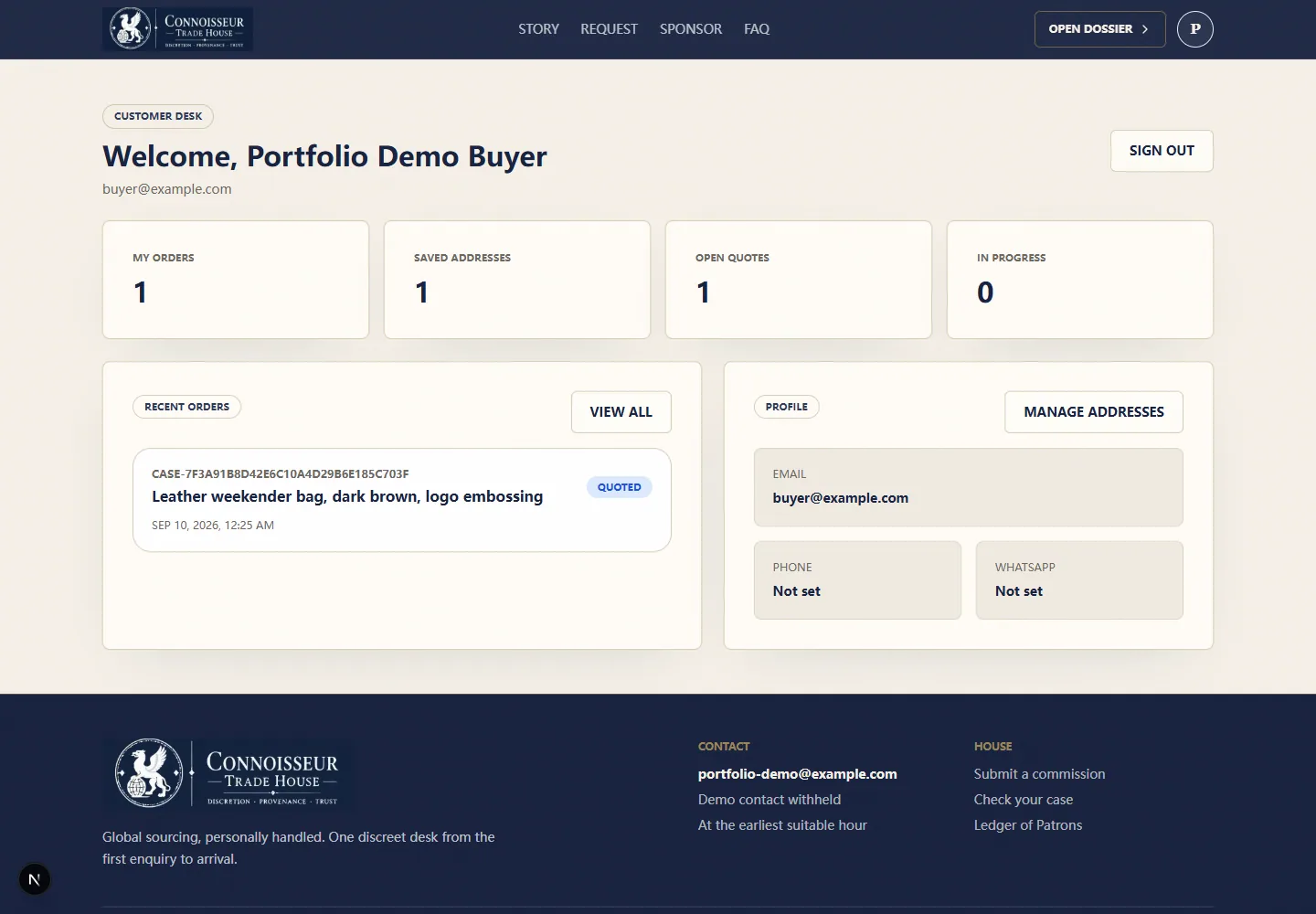
Stack
Next.js · TypeScript · Tailwind · Mock data
Evidence & source
The README lists implemented customer and admin routes, mock payments and persistence limits. Portfolio screenshots use fictional orders.
Read project documentation ↗